Basketball season is tipping off in gyms all over Texas. Every parent in the bleachers sees the same thing: the player who can dribble with their head up, using either hand, is the one who runs the offense. The player who has to stare at the ball gets trapped.
As a coach and a dad, I’ve learned that the best habits don’t come from one big Saturday workout. They come from small reps, done often. Good ball-handling drills fit in a driveway, a garage or a gym corner, and 10 minutes is enough.
Your brain learns movement better in short, spread-out sessions. A research review in Nature Reviews Neuroscience notes that spaced learning is more effective than massed learning for skill learning and motor learning. Ten focused minutes on most days beats cramming an hour once a week.
Keep it fun, too. In a paper from NBA and USA Basketball experts, the top reason kids play basketball, cited by 74% of children and adolescents, is to have fun.
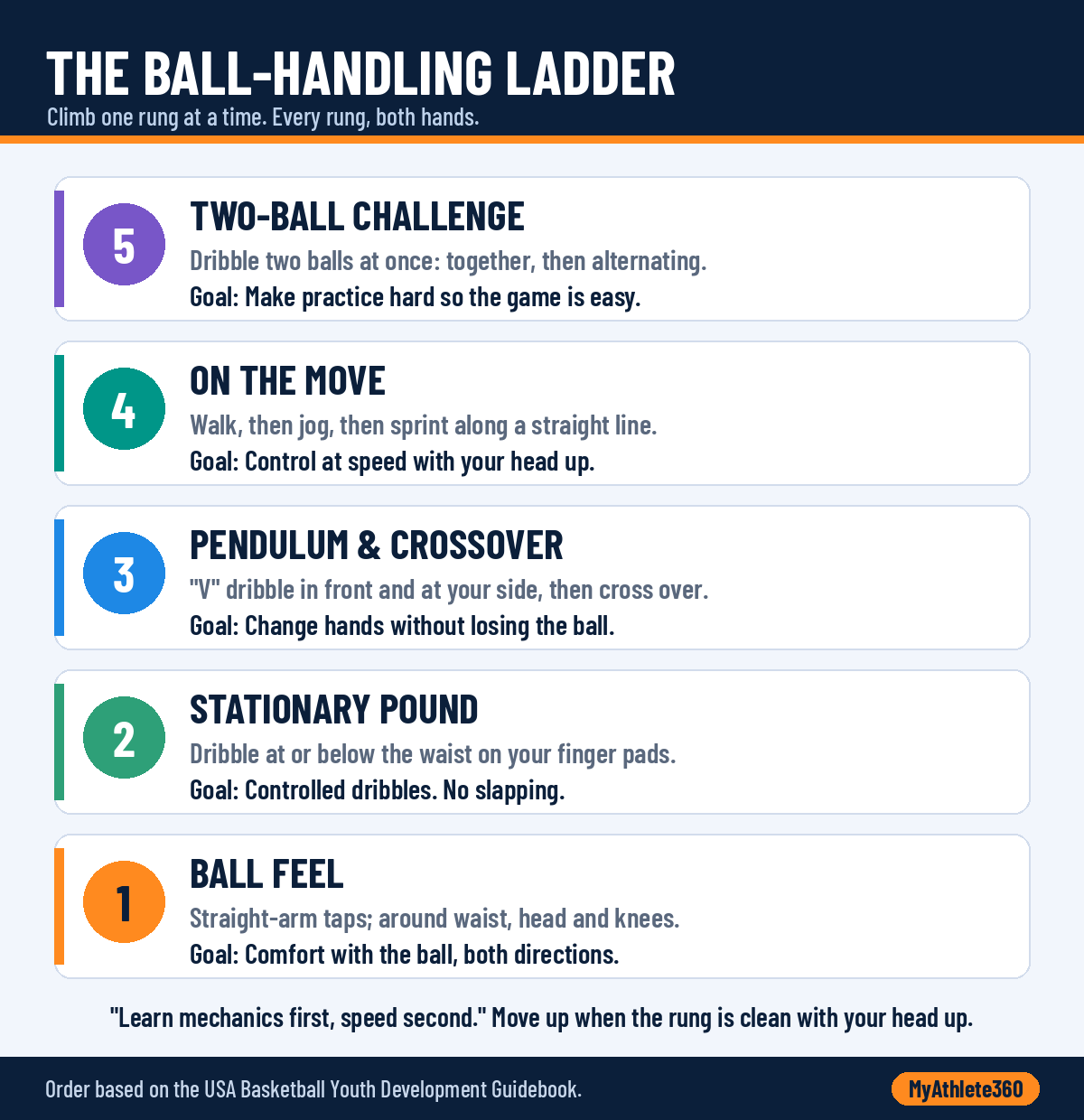
This ladder follows the order in the USA Basketball Youth Development Guidebook. Start at the bottom. Every rung uses both hands.
The guidebook’s advice for every drill: “Learn mechanics first, speed second.” Move up a rung when your player can do the current one with their head up and no lost balls.
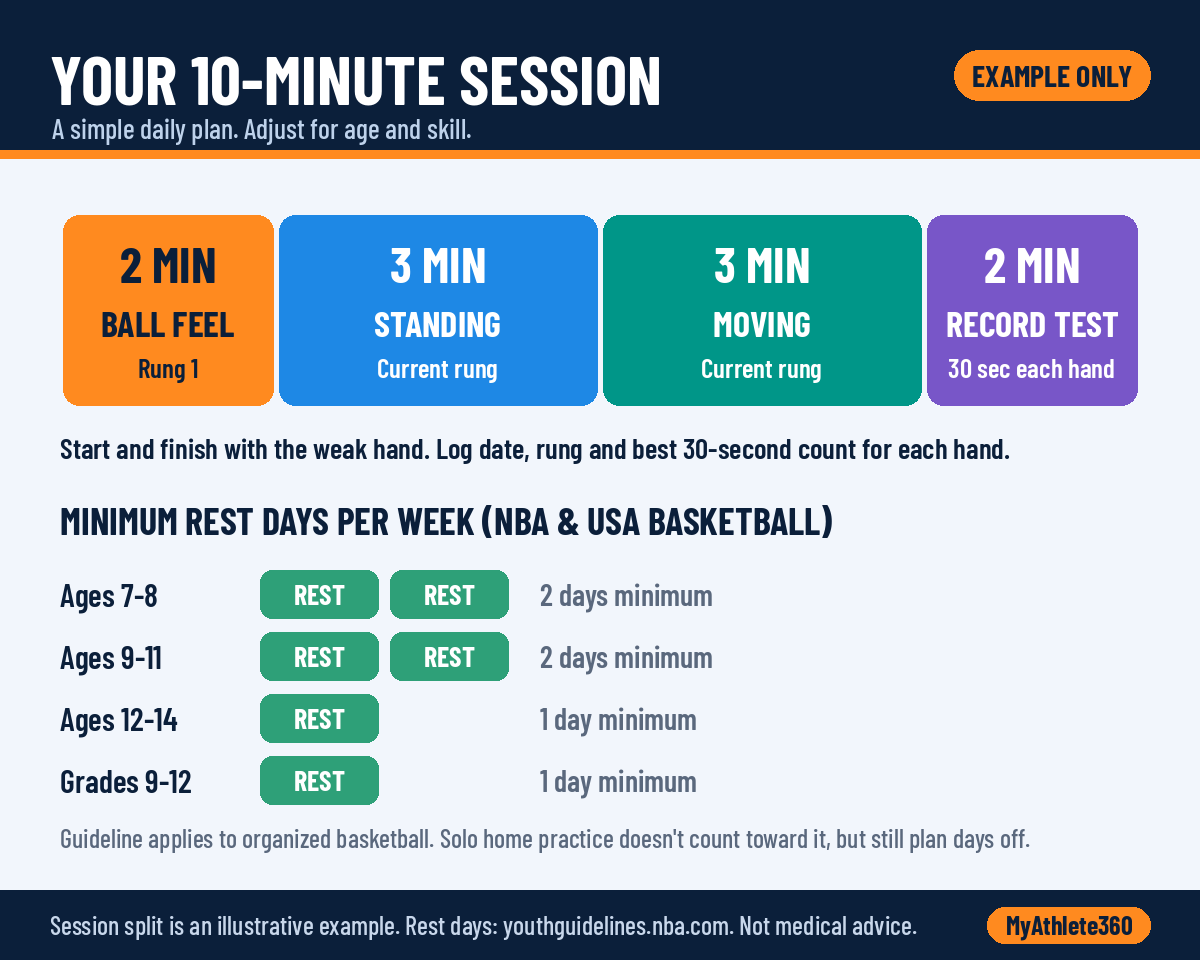
Plan days off. The NBA and USA Basketball Youth Basketball Guidelines call for at least 2 rest days a week for ages 7 to 11 and at least 1 for ages 12 and up. Solo driveway work doesn’t count as “organized basketball” under those guidelines, but rest still matters. Five days a week is plenty.
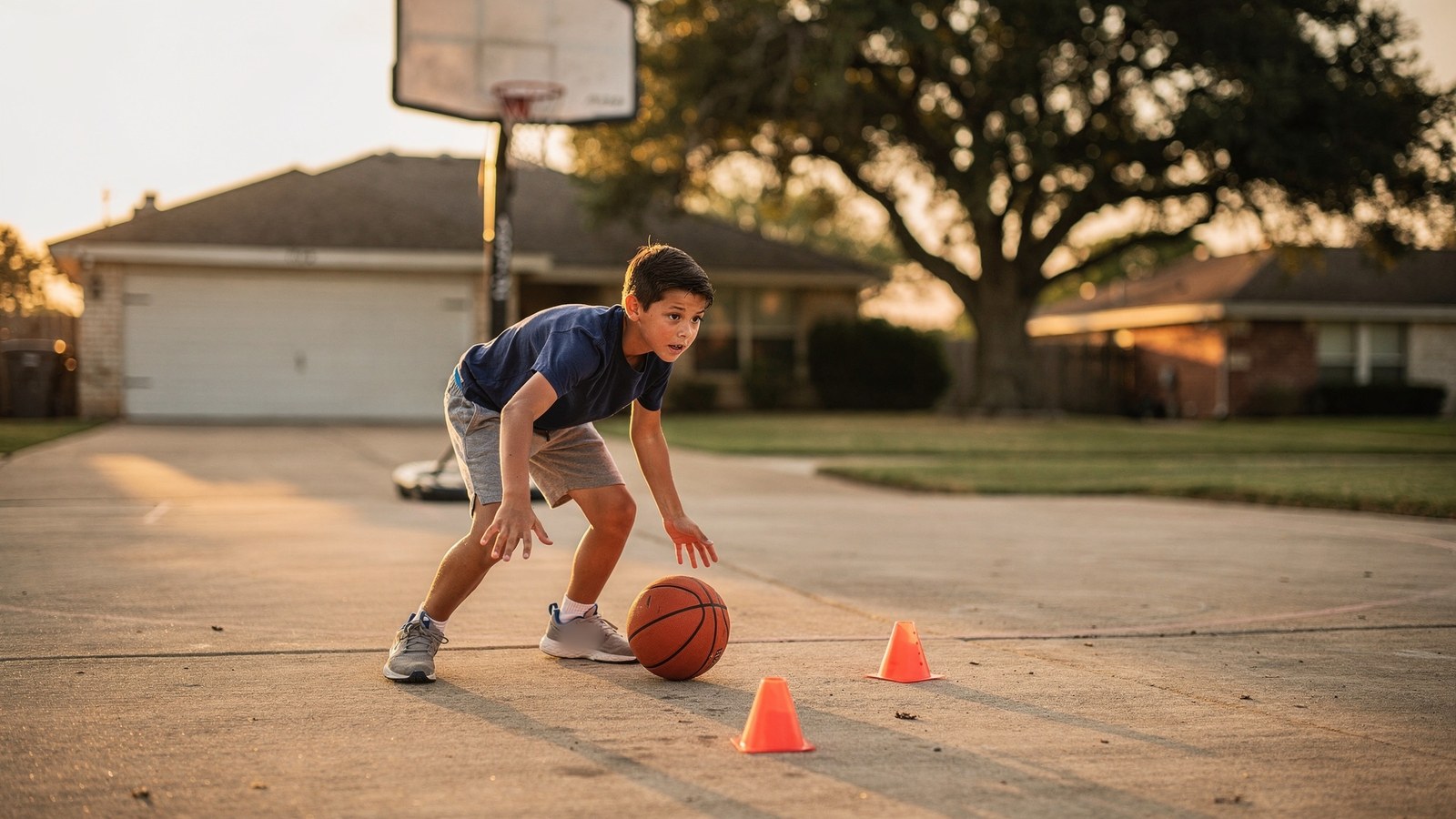
Most young players lean on their strong hand, and defenders notice. USA Basketball’s guidebook says to “use both hands equally,” and its coaching article adds, “the more a player forces him or herself to train both hands equally, the better each hand will get.”
Research points the same way. In a video study of adult games, professional players used their non-dominant hand more often and with greater success than amateurs. A follow-up paper from the same lab reports pros dribbled with their non-dominant hand in 47.0% of dribbling actions versus 19.9% for amateurs. That shows a link, not proof, but the lesson is clear. A simple rule: start and finish every session with the weak hand.
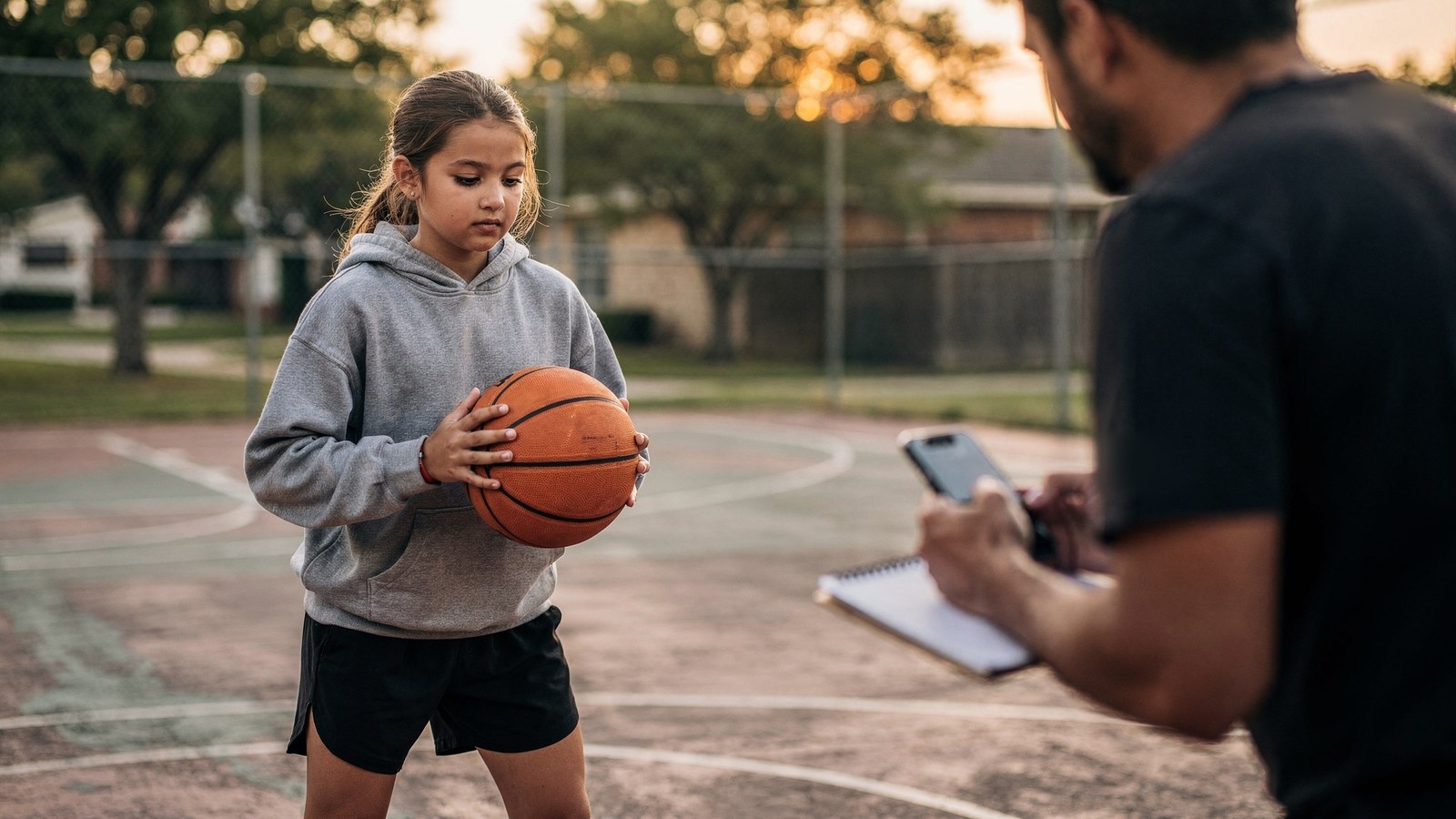
USA Basketball suggests a game coaches use with beginners: count clean reps and “challenge players to do better than their own previous ‘record’ each time.”
Do that at home. In the record test, count clean dribbles in 30 seconds with each hand, plus one move of the week. Write it in a notebook with the date and rung. Kids love beating their own number, and parents get proof that it’s working.
Consider a trainer or skills coach when your player is stuck on the same rung for several weeks, keeps slapping the ball or staring at it, or is getting ready for tryouts at a new level. Ask about their coaching background, certifications and how they teach young players.
If your child has pain in a wrist, finger or knee that doesn’t go away, check with your pediatrician or a qualified sports medicine professional. This post is general information, not medical advice.
Ten minutes, both hands, one notebook. That’s the whole plan.
Want a coach who can take your player’s handles to the next level? MyAthlete360 helps Texas families find basketball coaches and skills trainers for girls and boys, plus soccer, baseball and softball coaches, speed and agility trainers, online tutors and counselors, all in one app. We check provider credentials and certifications so you can choose with more confidence.
Available on iPhone and Android.
Get it on the App Store | Get it on Google Play
Questions? contact@myathlete360.net
