As President of the Girls Track Booster Club in Copperas Cove ISD and the founder of MyAthlete360, I’ve learned something every Texas sports family should hear early in the season: a report card can take an athlete out of competition just as surely as an injury.
Whether your child plays volleyball, runs track, swims, or plays basketball, soccer or baseball, the same Texas rule applies. Here’s what “No Pass, No Play” means and how tutoring can help.
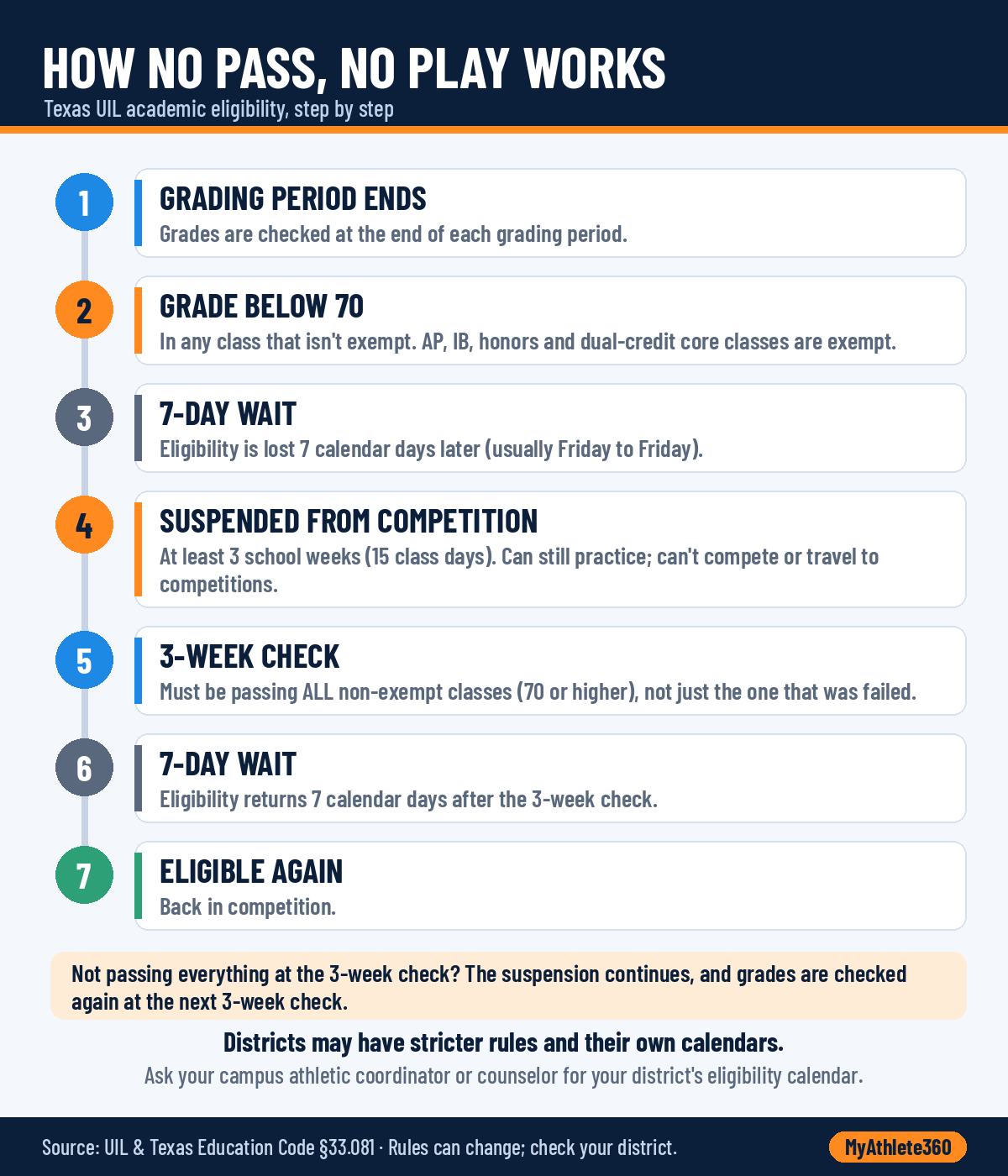
Under Texas Education Code §33.081, a student who earns a grade below 70 in any class at the end of a grading period (other than exempt courses) is suspended from extracurricular competition for at least three school weeks. The UIL counts that as 15 class days. The details matter:
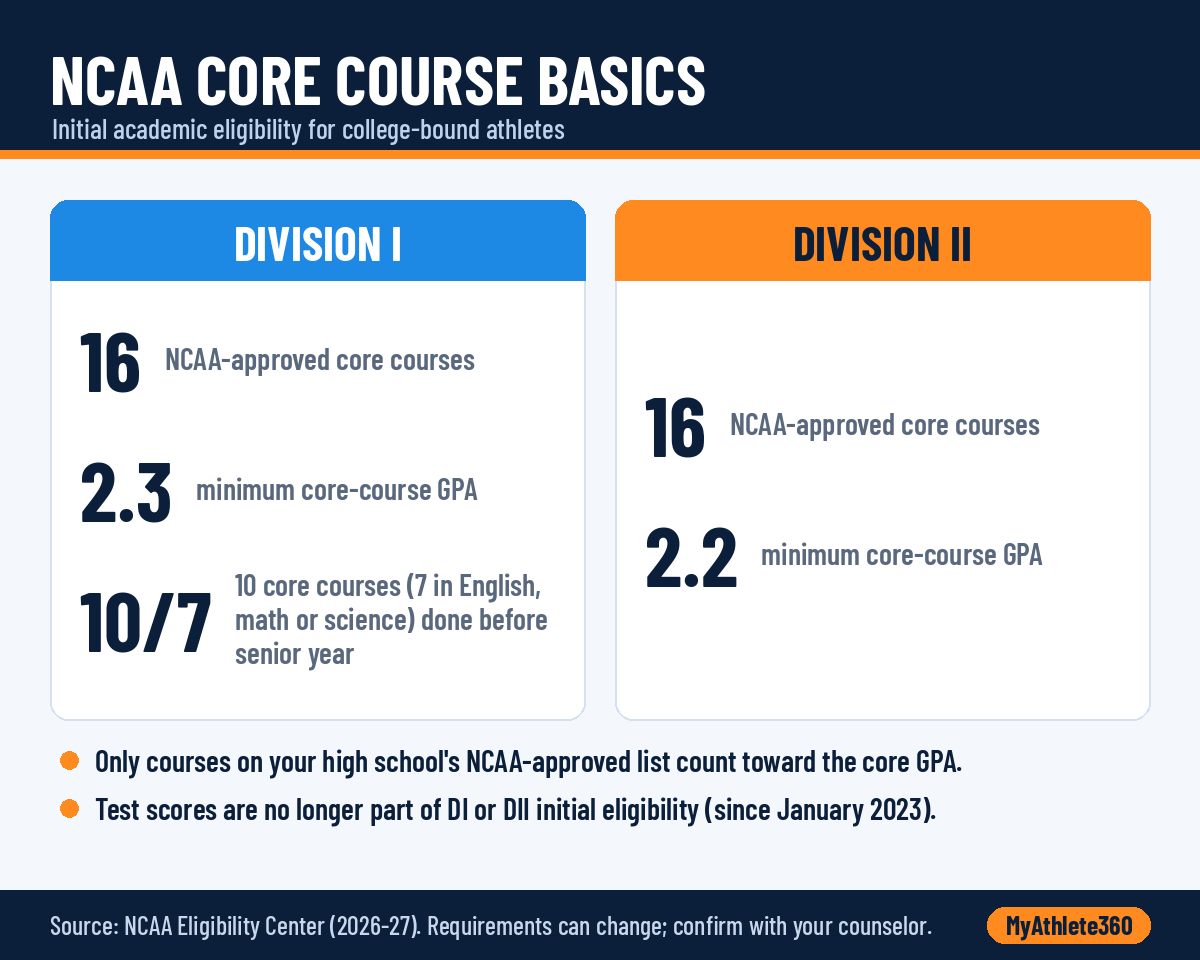
College eligibility is built in high school. NCAA Division I requires 16 NCAA-approved core courses, a minimum 2.3 core-course GPA, and the “10/7” rule: 10 of the 16 core courses, including 7 in English, math or science, completed before senior year (the seventh semester) starts. Division II also requires 16 core courses, with a minimum 2.2 core GPA. Since January 2023, test scores are no longer part of Division I or II initial eligibility, according to the NCAA’s guide.
One catch: only classes on your school’s NCAA-approved list count toward the core GPA, so check that list with your school counselor early.
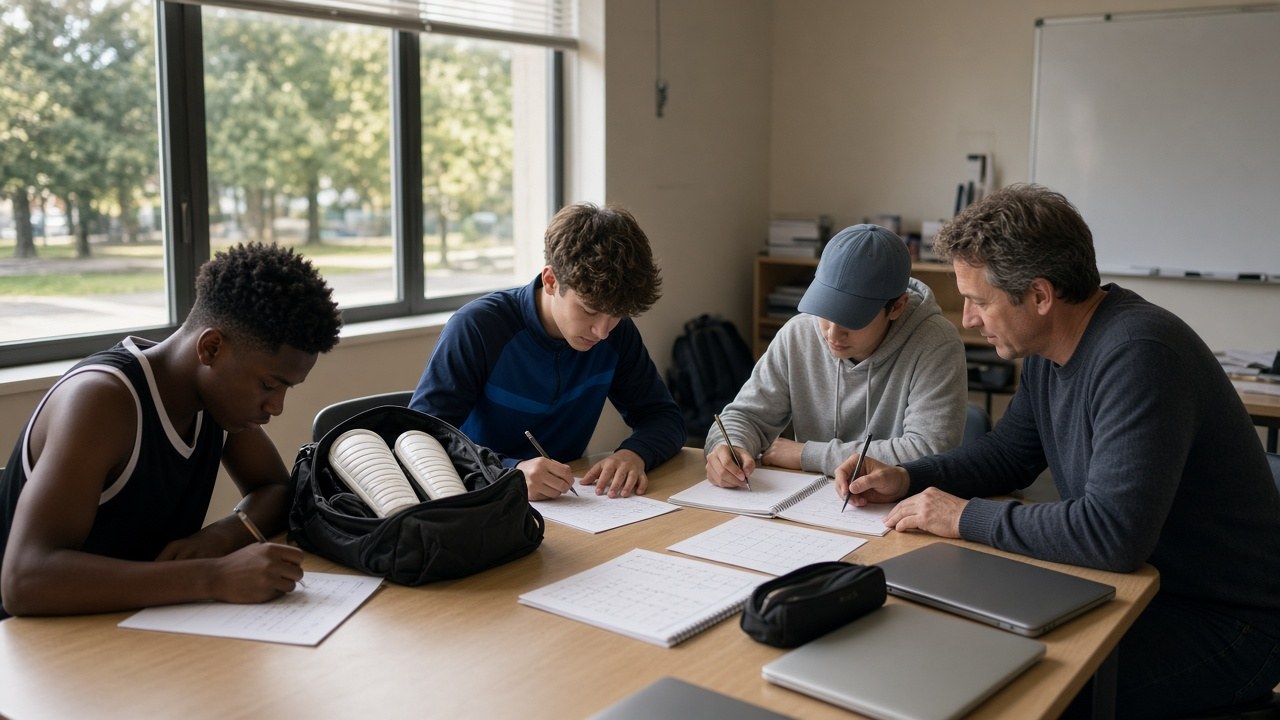
Twenty-one years in the U.S. Army taught me a simple lesson: you get ready before the inspection, not during it. The grade at the end of the grading period is what counts, so the best time to bring in a tutor is the first weeks of a grading period – not after the report card.
The Texas Education Agency describes high-impact tutoring with a few key ingredients. It’s written for school programs, but it makes a great checklist for families:
Research points the same way. A 2024 meta-analysis of PreK–12 tutoring experiments in the American Educational Research Journal found “consistently substantial positive impacts on learning,” with larger effects for programs meeting at least three days a week. That study measured learning, not athletic eligibility, so tutoring is support, not a guarantee. But understanding the material is what keeps grades above 70.
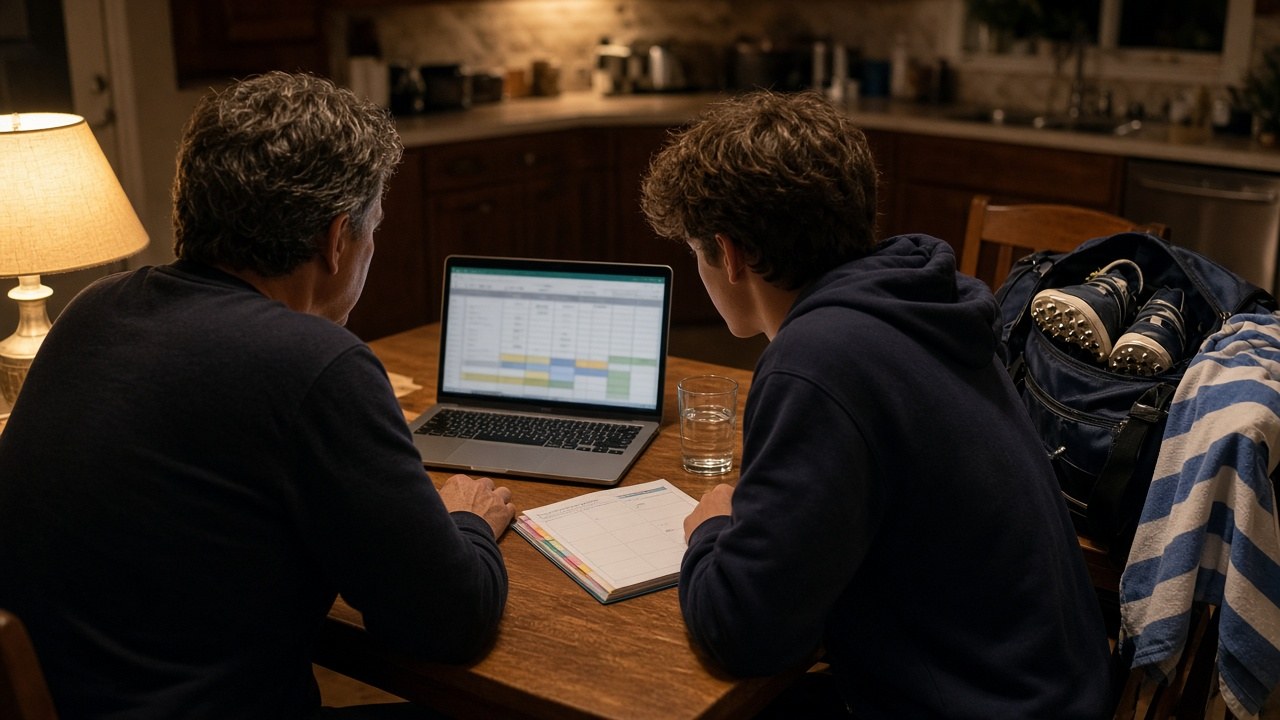
Our athletes want to compete. Staying eligible is how they earn that chance – and the habits that keep them above 70 today are the same ones that keep college doors open tomorrow.
– Major R. Alexander Sr., CW3, U.S. Army (Ret.), Founder & CEO, MyAthlete360
Rules can change and vary by district. Check with your school, athletic coordinator or counselor for current policies.
MyAthlete360 connects athletes and parents with coaches, trainers, tutors and counselors in one app. We check provider credentials and certifications, so you can find a tutor for that tough class – or a counselor to talk things through – with more confidence.
Available on iPhone and Android.
