Many young athletes believe the path to improvement is simple: practice more, train harder, never take a day off. That drive is something to celebrate. But one of the most important parts of getting better is something that can feel like doing nothing at all – resting.
Whether your child plays basketball, soccer, baseball, volleyball, swims or runs track, rest days for young athletes are not a sign of weakness or laziness. They’re part of smart training.
Training challenges the body. Rest gives it time to recover and adapt to that work. Without enough recovery, athletes can feel tired, sore and less sharp – and practices start to feel like a grind instead of something they look forward to.
Rest is also mental. Young athletes juggle school, homework, games, travel and friendships. A day away from structured training gives the mind a break, too, and can help kids return to their sport feeling refreshed and excited.
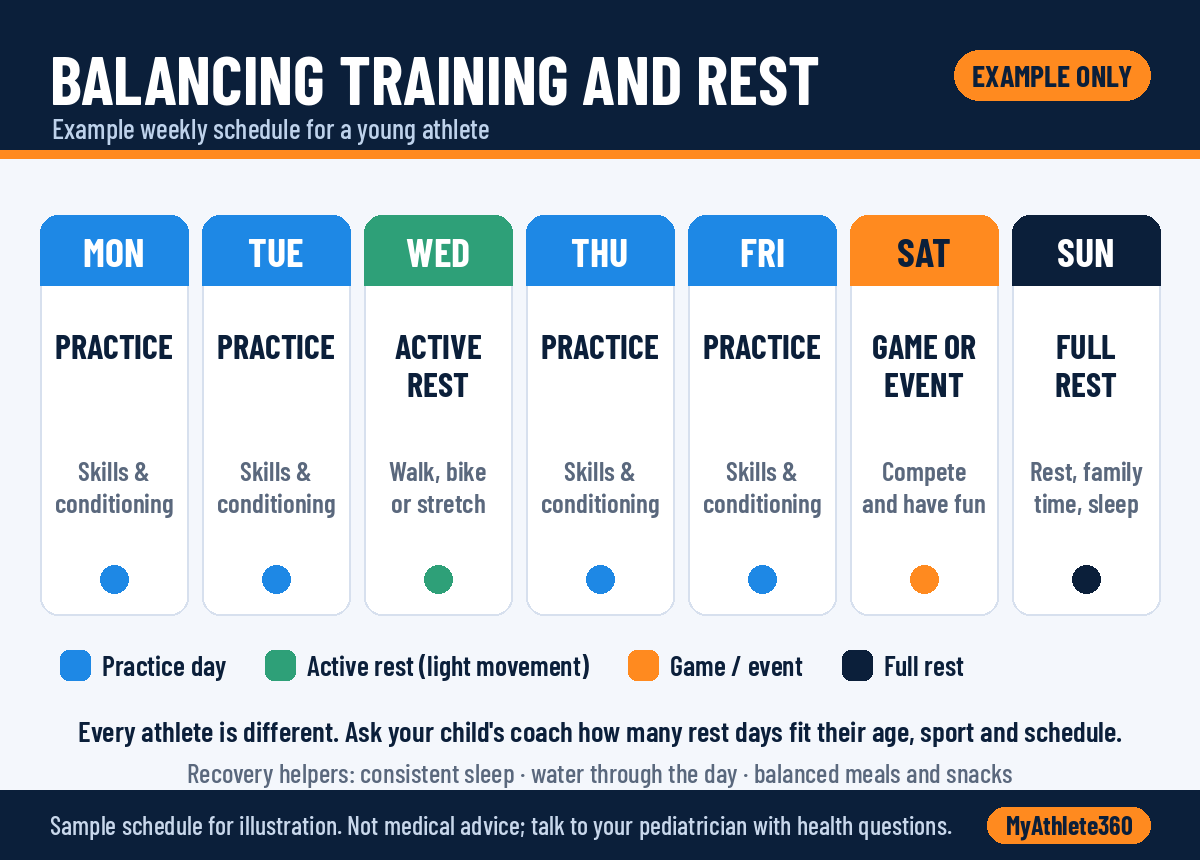
A rest day doesn’t have to mean lying on the couch all day (though some downtime is fine). Many families like “active rest,” which keeps kids moving lightly without the intensity of practice:
The key is keeping it light and enjoyable. If it starts to feel like a workout, it probably isn’t a rest day.
Your child’s coach can help you figure out how many rest days make sense for their age, sport and schedule.

Sleep is one of the simplest and most powerful parts of recovery. Busy schedules, late games and screens can cut into it, so a few habits can help:
Not sure how much sleep is right for your child’s age? That’s a great question for your pediatrician.

Recovery also depends on what athletes drink and eat. Some practical habits:
Every child’s needs are different, so talk with your pediatrician if you have questions about nutrition or hydration for your athlete.
Sometimes young athletes push too hard without realizing it. Here are some signs worth paying attention to:
If you notice any of these, it’s a good time to step back, check in with your child, and talk to their coach. If you have any health concerns, reach out to your pediatrician.
Rest days are also a great chance to catch up on schoolwork, spend time with family, or just be a kid. For student-athletes with packed schedules, a little extra help can make a big difference – a tutor can help keep grades steady, and a counselor can be a helpful person to talk to when the pressure builds.
Remember: the goal is a long, healthy, happy journey in sports – not burning out by the end of one season.
Building a smart training plan is easier with the right team. MyAthlete360 connects athletes and parents with coaches, trainers, tutors and counselors in one easy app on iPhone and Android. We check provider credentials and certifications, so you can find support for your athlete with more confidence – on the field, in the pool, on the court and in the classroom.
Available on iPhone and Android.
